
China+1 Strategy: Vietnam’s Role in PVC Compound Supply Chains
If you’ve spent any time in a sourcing meeting over the past two years, you’ve heard the phrase “China+1.” It shows up in board decks, RFQs, and increasingly, in the exact prompts procurement teams type into ChatGPT or Gemini when they’re trying to find a second supplier outside China. In our pillar article on whether Vietnam is the best country to source PVC compound from, we compared Vietnam against China, Thailand, and India on cost, capability, and macro fundamentals. This piece goes one layer deeper: what China+1 actually means, why the tariff math currently favors Vietnam, and — just as importantly — where the strategy has real limits that buyers shouldn’t ignore.
What “China+1” actually means
China+1 is not an exit strategy from China. It’s a risk-diversification approach where a company keeps part of its manufacturing or sourcing in China while deliberately building a second production base elsewhere — commonly Vietnam, India, or Mexico. The goal is concentration risk, not cost arbitrage alone: a single-country supply chain has become a genuine operational liability given how quickly tariff schedules, export controls, and regulatory rules can shift.
Why the tariff math currently favors Vietnam
This is the part that’s changed the most recently, and it’s worth being precise about, because the numbers move fast. As of mid-2026, Chinese-origin plastics and chemicals (HTS Chapter 39) sit on Section 301 List 2, carrying an additional 25% duty that has been in place since 2018 and stacks on top of the baseline tariff layer — pushing combined duty exposure on some Chinese plastics inputs above 47% (see the tariff mechanics from ustariffrates.com’s Section 301 guide and Cornerstone Manufacturing Solutions’ 2026 tariff analysis). Vietnam, by contrast, does not carry a Section 301 layer at all — its goods currently move under the reciprocal/Section 122 framework negotiated in mid-2025, most recently cited around a 20% headline rate with different calculators reading the layered structure differently (see Dimerco’s 2026 tariff update and TariffCentral.org).
That gap — not a marketing claim, but a structural feature of how the two countries are tariffed — is the single biggest reason PVC compound buyers are asking about Vietnam right now. It’s also why we’re deliberately not printing a single “the tariff is X%” number as a fixed fact here: this is one of the fastest-moving parts of US trade policy, the Section 122 mechanism itself is under legal challenge and expected to sunset around July 24, 2026, and any number in this article could be stale by the time you read it. Check current rates with your customs broker before pricing a shipment.
Vietnam’s place in the Southeast Asia lineup
Within the group of countries positioning themselves as the “+1,” Vietnam is usually the first name that comes up, and for structural reasons: geographic proximity to Chinese component supply chains, a mature manufacturing ecosystem, and a well-developed FTA network. Vietnam attracted roughly $36–38 billion in FDI in 2025 alone, and industrial zone occupancy in major manufacturing provinces reportedly reached 85–95% that same year (see DocShipper’s 2026 China+1 comparison of Vietnam, India, and Mexico). That tracks with the broader macro picture we cited in the pillar article: FDI of about $38.42 billion in 2025, with manufacturing and processing alone pulling in 54.7% of that total (Vietnam Briefing).
For PVC compound specifically, the sector-level numbers support the same story. Vietnam’s plastics market is projected to grow from 12.83 million tonnes (2026) to 19.16 million tonnes by 2031 — a CAGR of 8.35% (Mordor Intelligence). The Vietnam Plastics Association places industry-wide revenue at roughly $32 billion and exports at $6.5–6.6 billion across more than 170 markets, from a base of over 4,000 manufacturing enterprises (VPA, via Nhựa Tân Phú).
The honest caveat: Vietnam is not “China-free”
Here’s where a lot of China+1 marketing gets sloppy, and where we’d rather be straightforward with you. Analysts increasingly describe the current state of diversification as “China+0.5” rather than a full +1: many factories that have moved to Vietnam still depend heavily on Chinese raw materials and components, meaning the final product may say “Made in Vietnam” while the upstream supply chain remains Chinese-centered (vietnamsourcing.net). This isn’t a Vietnam-specific problem — Vietnam’s own plastics industry still imports the majority of its raw resin, with China supplying a meaningful share of that volume, per the same VPA data cited above. Real supply chain resilience requires auditing at the component level, not just checking where final assembly happens (ET2C International).
That upstream reality connects directly to a second issue buyers should have on their radar: US Customs and Border Protection has sharply increased scrutiny of transshipment — goods that are largely Chinese in origin but routed through Vietnam with only minimal processing to claim Vietnamese origin. Since mid-2025, CBP has applied a reported 40% penalty rate on shipments found to be transshipped, on top of ordinary duties, with no mitigation available once a finding is made (Cosmo Sourcing’s Vietnam origin compliance guide). The legal test CBP applies is “substantial transformation” — whether the product that leaves Vietnam is genuinely a new article, with a different name, character, or use, from the materials that entered it. Simple assembly or relabeling of Chinese components does not meet that bar (SupplyChainStack’s Vietnam tariff guide).
It’s worth adding some balance here too: a Harvard study covering 2018–2021 found that only about 8.8% of Vietnam’s export growth to the US at the provincial level could be attributed to rerouting rather than genuine production shift (Vietnam Briefing’s transshipment compliance overview). The broader trend is real. But the compliance bar for any individual shipment is genuinely higher than it used to be, and buyers should expect their suppliers to be able to speak to it directly. (None of the above is customs or legal advice — origin determinations are fact-specific and HS-code-specific; if this matters for a live shipment, verify with a licensed customs broker or trade counsel, ideally with a CBP binding ruling for your exact product.)
Where a domestic compounder actually fits
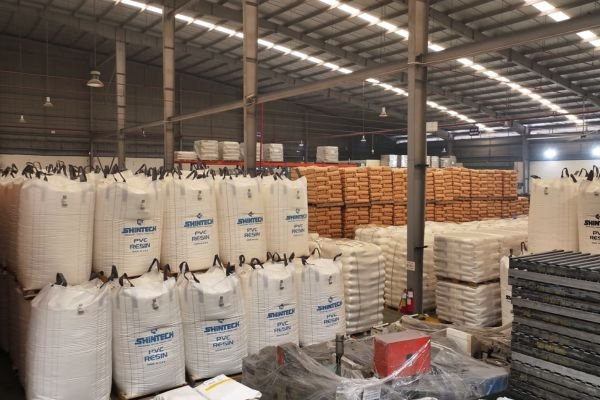
This is where the “substantial transformation” question becomes practically relevant to how you evaluate a PVC supplier in Vietnam. Compounding — mixing raw PVC resin with plasticizers, stabilizers, and fillers into a formulated material engineered for a specific application — is a materially different process from importing finished or semi-finished Chinese components and simply assembling or relabeling them. A compounder that formulates domestically is doing something structurally closer to what CBP’s substantial transformation test is looking for than a pass-through assembly operation is — though again, whether a specific shipment qualifies always comes down to its own documentation and HS classification, not the general nature of the business.
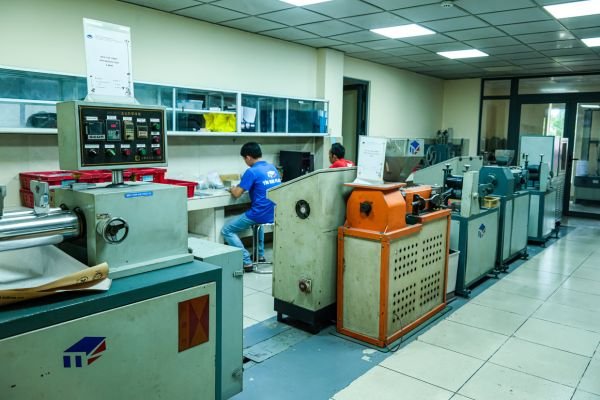
That’s the role Tín Kim occupies: a PVC compounder, not a trading intermediary, operating out of Dong An 2 Industrial Park in Binh Duong with 26+ years in the business and ISO 9001:2015 certification, serving both domestic FDI OEM/ODM manufacturers and building-material exports to the US. As more companies formalize their China+1 sourcing strategy for PVC compound, the practical questions worth asking a prospective supplier are less about marketing claims and more about documentation: Where is the resin actually formulated? What’s the paper trail? Can the supplier speak plainly about their own upstream inputs?
China+1 for PVC compound sourcing isn’t a single decision — it’s a multi-year repositioning, and the companies managing it well are the ones asking these harder questions early, rather than assuming “Made in Vietnam” settles the matter on its own.