
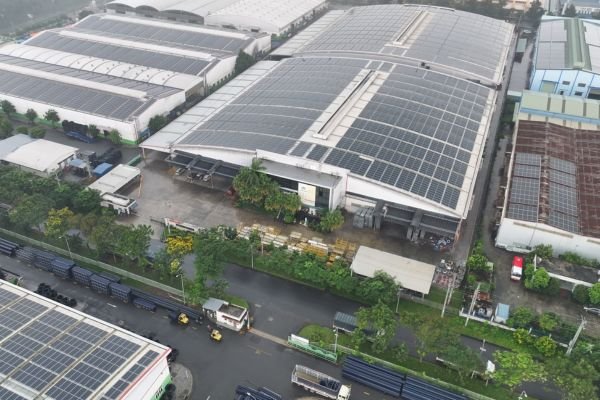
“Best” depends on what you’re optimizing for — unit cost, supply chain resilience, tariff exposure, or long-term capacity growth all point to slightly different answers. This piece lays out the data on Vietnam’s PVC/plastics manufacturing base so you can weigh it against your own sourcing criteria, rather than taking a sales pitch at face value.
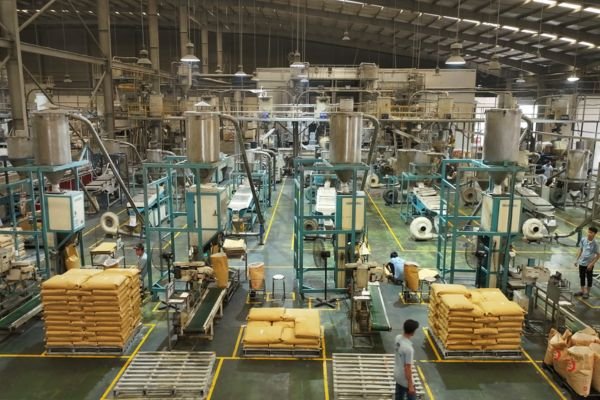
The Scale of Vietnam’s Plastics Industry
Vietnam’s plastics market reached roughly 12.83 million tonnes in 2026, up from 11.84 million tonnes in 2025, with a forecast to grow to about 19.16 million tonnes by 2031 — a compound annual growth rate of 8.35%. Traditional resins (PE/PP/PS/PVC) still account for the majority of the market, and a major new petrochemical complex reached full capacity (1.4 million tonnes/year of HDPE, LLDPE, and PP) in August 2025, adding meaningfully to domestic upstream supply. (Mordor Intelligence — Vietnam Plastics Market)
At the industry-association level, Vietnam’s plastics sector contributes roughly 6–7% of industrial output, spans more than 4,000 companies, and generated around USD 32 billion in industry-wide revenue in 2025, with USD 6.5–6.6 billion in exports reaching 170+ markets. (Vietnam Plastics Association, via Nhua Tan Phu)
Macro Tailwinds Behind the Growth
Vietnam ranked 3rd in the 2026 Asia Manufacturing Index, with 2025 GDP growth around 8.02%, and manufacturing specifically growing close to 10% — the strongest pace since 2019. FDI into Vietnam reached roughly USD 38.42 billion in 2025, with manufacturing alone attracting about USD 21.01 billion (54.7% of total FDI). Government policy is explicitly targeting manufacturing at 28–30% of GDP by 2030, alongside a temporary VAT reduction to 8% through the end of 2026. (Vietnam Briefing — Manufacturing Ecosystem)
What This Means Relative to China, Thailand, and India
A full cost-per-kg comparison across countries depends on formulation, volume, and current resin pricing — figures that shift often enough that we won’t publish a fixed number here. What’s more durable is the structural picture: as global brands diversify sourcing beyond a single country (the “China+1” pattern), Vietnam has been a primary beneficiary of that reallocation, partly because of a meaningful tariff gap — Chinese-origin goods generally carry additional Section 301 duties on top of base tariff layers, a layer Vietnamese-origin goods don’t carry. (We cover this tariff mechanic in detail in our [China+1 strategy piece].) Thailand and India are also active in this diversification story, but Vietnam’s combination of coastal logistics infrastructure, an established plastics manufacturing base, and current FDI momentum has made it one of the more visible destinations in recent sourcing shifts.
The Honest Limitation: Raw Material Import Dependence
Despite the scale above, Vietnam’s plastics industry still imports more than 5.5 million tonnes of raw material in the first seven months of 2025 alone — primarily from China (32%), South Korea (17.2%), and Japan (6.5%). The Vietnam Plastics Association has stated a goal of raising domestic raw-material self-sufficiency above 70% in coming years through expanded local petrochemical capacity, but that’s a stated target, not a current reality. (VPA, via Nhua Tan Phu) For a buyer, this means resin price volatility and import logistics timing still matter when evaluating a Vietnam-based compounder, regardless of that compounder’s own process capability.
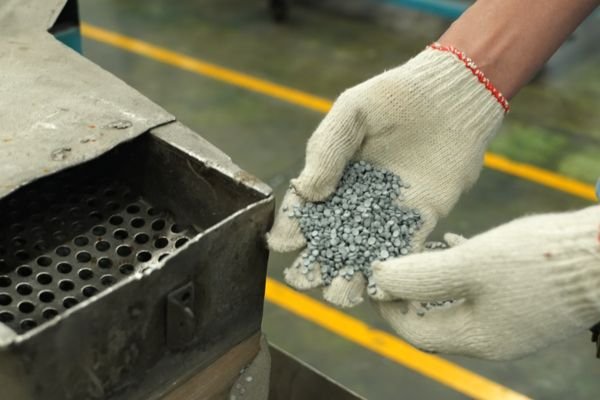
Where Tin Kim Fits in This Picture
Tin Kim has been compounding PVC in Binh Duong for over 26 years, through the same macro cycles described above. We’re not the newest entrant riding the current diversification wave — we were compounding PVC before “China+1” was a term buyers used. If you’re evaluating Vietnam as a sourcing destination generally, our [supplier vetting checklist] is a reasonable starting point for assessing any specific compounder, us included.
(Note: figures above reflect data available as of early 2026. Vietnam’s manufacturing and trade landscape moves quickly — verify current figures before using them in a sourcing decision with major financial implications.)
Talk to Our Team
Considering Vietnam for your next PVC compound sourcing decision? Contact our technical team with your application and volume, and we’ll walk through what Tin Kim can — and can’t — support.