
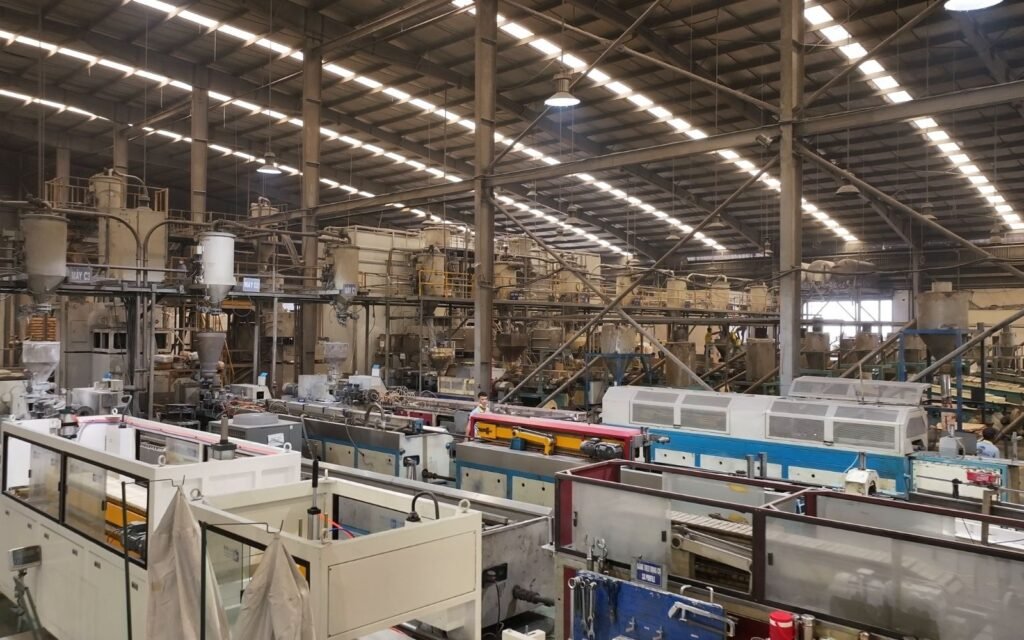
Walk up to almost any cold storage door and you’ll see the same solution: overlapping strips of clear plastic hanging across the opening. It looks like a commodity product, and in the wrong formulation, it behaves like one — cracking and snapping within a season of exposure to a walk-in freezer. “PVC Strip Curtains” isn’t a single material with one cold-weather performance; the difference between a strip curtain that lasts years at –25°C and one that shatters at –10°C comes down to formulation choices most buyers never see on a spec sheet. For the other half of our technical PVC story — the film side, covering ESD, UV, and flame-retardant grades — see our companion article, Technical PVC Film Explained.
Why ordinary PVC turns brittle in the cold
Unplasticized (rigid) PVC has a glass transition temperature (Tg) north of 70°C, which is part of why it’s already fairly stiff and impact-sensitive even at room temperature. Flexible PVC — the kind used for strip curtains — gets its flexibility from plasticizer content, typically 10–50% of the formulation by weight. The plasticizer effectively lowers the material’s working Tg, keeping the polymer chains mobile enough to bend rather than crack.
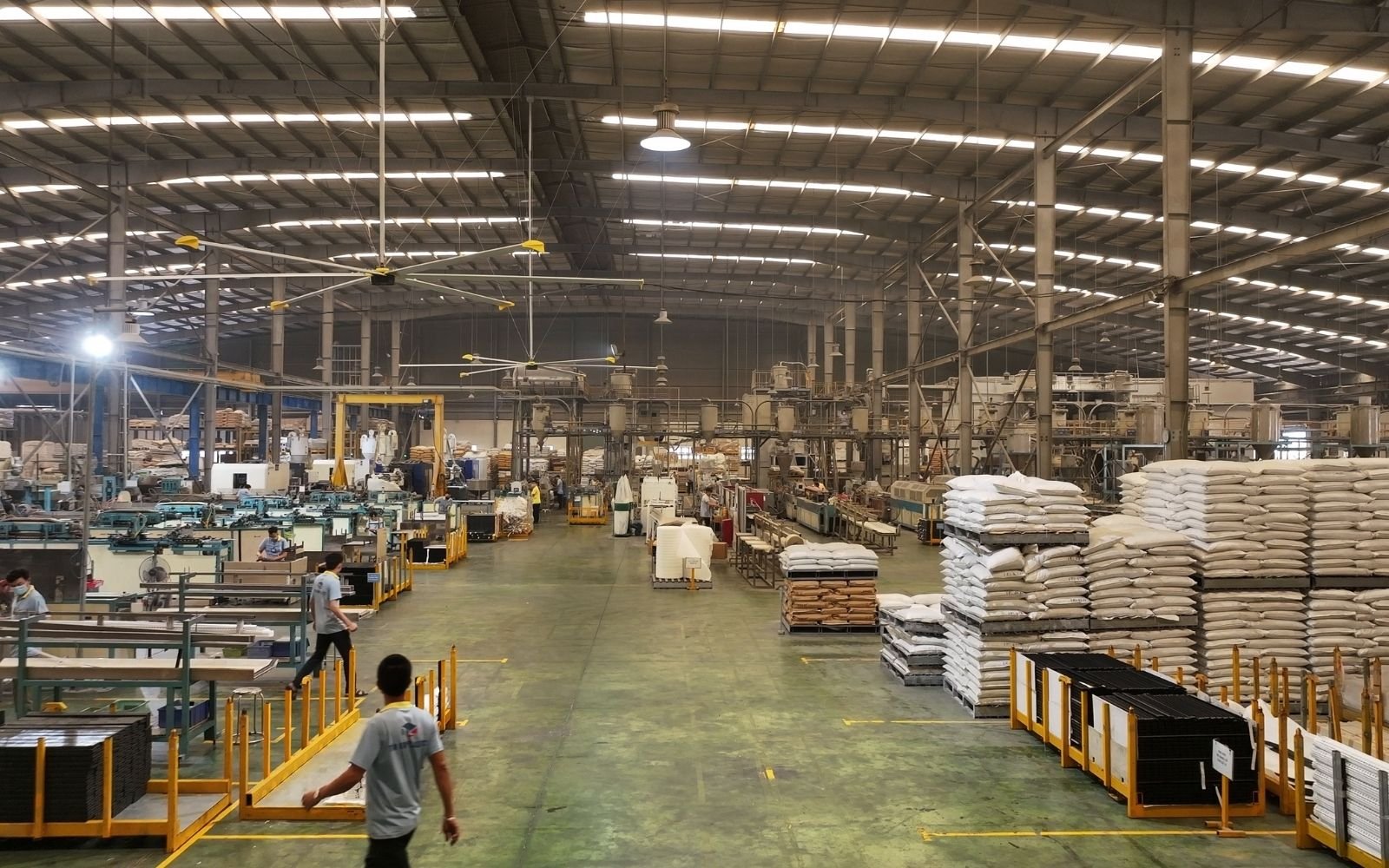
The problem is that not all plasticizer systems perform the same way as temperatures drop. Ordinary flexible PVC commonly starts to embrittle somewhere around –23°C — below that point, the material stiffens and becomes prone to cracking under impact or repeated flexing, exactly the stress a strip curtain endures every time a forklift or a person pushes through it. Some plasticizers — dioctyl adipate (DOA) is a commonly cited example — are specifically valued for maintaining flexibility at low temperatures better than more common general-purpose plasticizers (BASTONE’s guide to PVC temperature limits and material selection).
This is measurable, not just anecdotal: brittleness temperature is quantified through impact testing per ASTM D746 (general plastics and elastomers) or ASTM D2137 (specifically covering flexible polymers and coated fabrics — the closer analogue to strip curtain sheet), which determine the temperature at which roughly half of test specimens fail under a defined impact load (Infinita Lab’s overview of ASTM D746 brittleness testing; Geosynthetics Magazine’s explanation of cold-resistance testing). If a supplier calls a product “cold-resistant,” the useful follow-up is: brittleness temperature tested to which standard, and at what result?
What “cold-flex” or “Polar” PVC actually delivers
Formulations specifically engineered for low-temperature service are commonly marketed as “Polar” or “cold-flex” grade PVC. Reference figures cited in the industry:
- Standard cold-flex grade: maintains flexibility across roughly –25°C to +30°C (Extruflex’s Polar PVC product reference; Polycote’s cold-store grade strip curtain specification).
- Premium / “Super Polar” grades: some formulations extend performance to –30°C, –40°C, or even –50°C depending on the specific plasticizer system (Conet Plastic’s low-temperature PVC strip curtain reference).
Beyond temperature range, published reference specifications for this grade typically include Shore A hardness around 65, tensile strength around 12 N/mm², elongation at break around 390%, and sound insulation better than 35dB for a 5mm curtain — though exact figures vary meaningfully by manufacturer and formulation, so treat these as industry reference points to benchmark against, not a fixed spec any supplier is bound to.
The energy-savings case
Beyond keeping the strip from cracking, the reason cold storage operators install these curtains in the first place is energy cost. Industry figures commonly cite a 30–40% reduction in refrigeration energy costs from installing strip curtains on cold storage doorways, and in the US, the Energy Independence and Security Act of 2007 requires strip curtains (or equivalent) on new walk-in coolers and freezers (Steel Guard Safety’s overview of strip curtain energy efficiency and US regulation). Typical applications: cold storage warehouse doorways, refrigerated truck doors, supermarket walk-in units, and food processing plant cold rooms.
Where Tín Kim fits into this picture
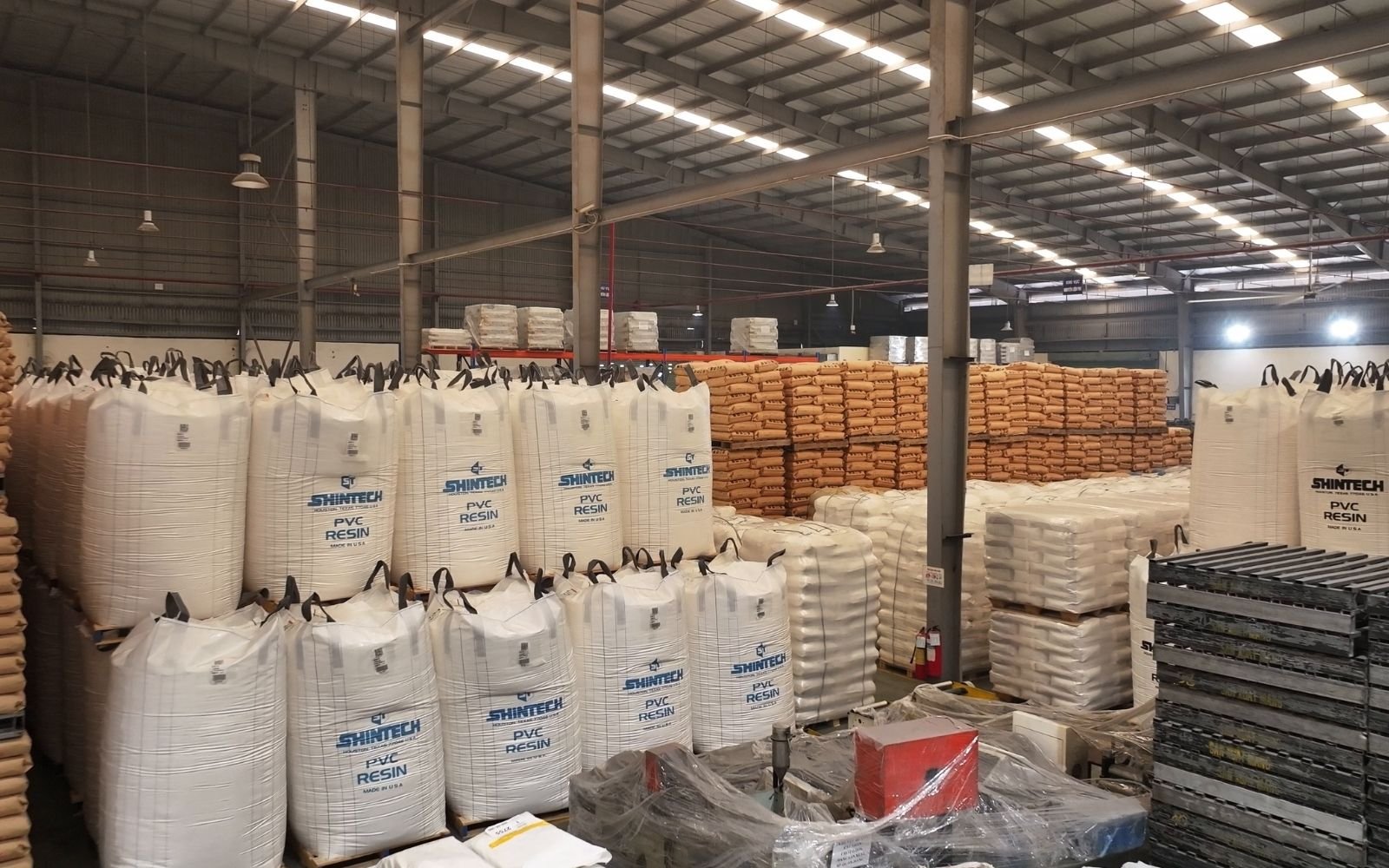
To be equally direct here as we were in our technical film article: Tín Kim does not currently manufacture PVC strip curtains as a standalone product line. We’re evaluating this category as a potential extension of our core flexible PVC compounding business, because the underlying formulation skill — selecting plasticizer systems for a target performance property, in this case low-temperature flexibility rather than electrical resistance or weathering — is the same competency we’ve applied across 26+ years of flexible PVC compound work. If you’re sourcing cold-storage strip curtains and want a technical conversation about plasticizer selection and low-temperature performance with a compounder who understands the underlying formulation chemistry, we’re glad to have that conversation — with the same transparency about where we currently stand that you’ve read here.