

Technical PVC film” isn’t one product — it’s three, bundled together because they share a manufacturing base but serve completely different failure modes. An electronics buyer worried about static discharge, a signage or agricultural buyer worried about years of sun exposure, and a component/cable buyer who needs a material that self-extinguishes are all searching in the same general category, but they’re actually asking three different technical questions. This guide breaks each one down — what the specification actually measures, which standard governs it, and what a genuinely compliant product looks like — so you know what to ask a supplier, regardless of which one you end up sourcing from.
ESD / Antistatic PVC Film
Static electricity is measured on a scale most people never think about: a human being typically can’t even feel a static discharge below roughly 2,000–3,000 volts, but as little as 10 volts can destroy a sensitive transistor on a chip. That gap is the entire reason ESD-rated packaging and film exist.
Materials are classified by surface resistivity into three bands:
| Classification | Surface resistance (Ω/sq) |
| Conductive | < 10⁵ |
| Static Dissipative (ESD-safe) | 10⁵ – <10¹² |
| Insulative | ≥10¹¹ |
(classification per ESD Association ADV1.0-2017, via Techspray’s ESD control guide)
The commercial benchmark most buyers reference is ANSI/ESD S20.20, and the actual resistance measurement is typically taken per IEC 61340-2-3:2016 or equivalents (ANSI/ESD STM11.11, ASTM D4496), using a concentric-ring electrode at 100V or 500V test voltage under controlled temperature (Tuball’s overview of ESD standards). Static dissipative grades typically use lighter additive loading — dissipative polymer coatings, or surfactants that hold a thin surface moisture layer — which lets them keep transparency or light coloring, ideal for visual inspection of components inside. Conductive grades use heavier loading (carbon black, carbon fiber, or metal particles), are usually black, and are chosen when immediate grounding or EMI/RFI shielding matters more than seeing through the material (Interstate Plastics’ comparison of static dissipative vs conductive plastics).
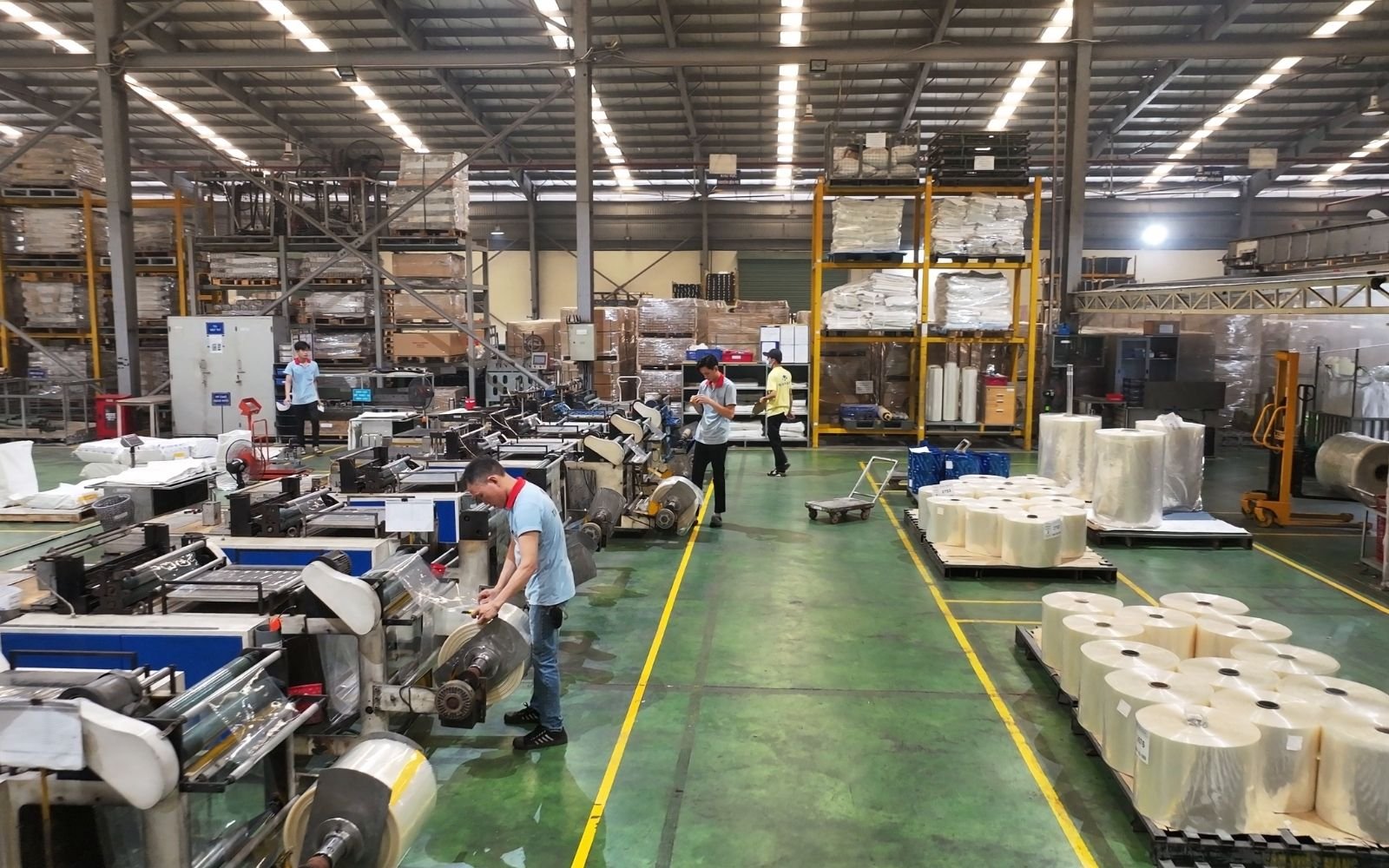
Commercial transparent PVC ESD film typically runs 10⁶–10⁸ Ω surface resistance, around 80–85% light transmission, self-extinguishing per UL 94 V-0, and an operating range of roughly –20°C to +60°C (AntistaticPlastics.com’s commercial PVC ESD reference). Typical applications: protective enclosures around electronic equipment, cleanroom windows for pharma/medical environments, automation frames, and logistics partitions for ESD-sensitive shipments. Worth flagging: PVC ESD film is generally less mechanically durable than polycarbonate ESD film and has more limited outdoor UV durability — which is exactly the concern the next category addresses.
UV-Resistant PVC Film
Outdoor or semi-outdoor PVC film faces a different failure mode entirely: photodegradation. UV exposure breaks down polymer chains, causing discoloration, chalking, and eventually embrittlement. Two accelerated weathering tests dominate how this gets specified and verified:
- ASTM G154 — the fluorescent UV (QUV) test. Uses UVA-340 lamps to replicate the shortwave UV portion of sunlight (most common for general outdoor durability testing) or the harsher UVB-313 spectrum for faster screening. Cycles alternate UV exposure with condensation.
- ASTM G155 — xenon-arc testing. Uses a full-spectrum xenon lamp (UV + visible + infrared) with daylight or window-glass filters, giving a closer simulation of actual outdoor sun exposure than fluorescent UV alone.
(see VTEC Laboratories’ comparison of ASTM G154 vs G155 and Q-Lab’s technical notes on ASTM G154)
The pass/fail metric in both cases is typically color change (ΔE*ab, measured via CIE Lab coordinates before and after exposure) plus gloss retention. If a supplier claims “UV-resistant,” the useful follow-up question is which test method and cycle they run, for how many hours, and what ΔE threshold they consider a pass — a vague claim without a cycle count and a ΔE number isn’t a specification, it’s marketing language.
Flame-Retardant PVC Film
PVC has a genuine structural advantage here: its chlorine content gives rigid, unplasticized PVC a naturally high Limiting Oxygen Index (LOI) — commonly cited around 43%, compared to the 21% oxygen concentration in ordinary air — which is why rigid PVC often self-extinguishes with little or no added flame retardant (Grokipedia’s technical comparison of PVC and CPVC).
Film applications, though, are usually the flexible (plasticized) side of PVC, and this is the nuance worth understanding: the plasticizer itself is often the flammable component, and studies on plasticized PVC formulations have measured base LOI values as low as the low-to-mid 20s before any flame retardant additive is introduced (patent literature on synergistic PVC fire retardant additives). In other words, a genuinely flame-retardant flexible PVC film is a deliberate formulation choice, not an automatic property of “being PVC” — it typically requires additive systems (antimony trioxide as a halogen synergist, or non-halogen alternatives like aluminum trihydrate, magnesium hydroxide, or zinc borate) to push LOI above the general self-extinguishing threshold of roughly 28% (SpecialChem’s guide to LOI and flame-retardant plastics).
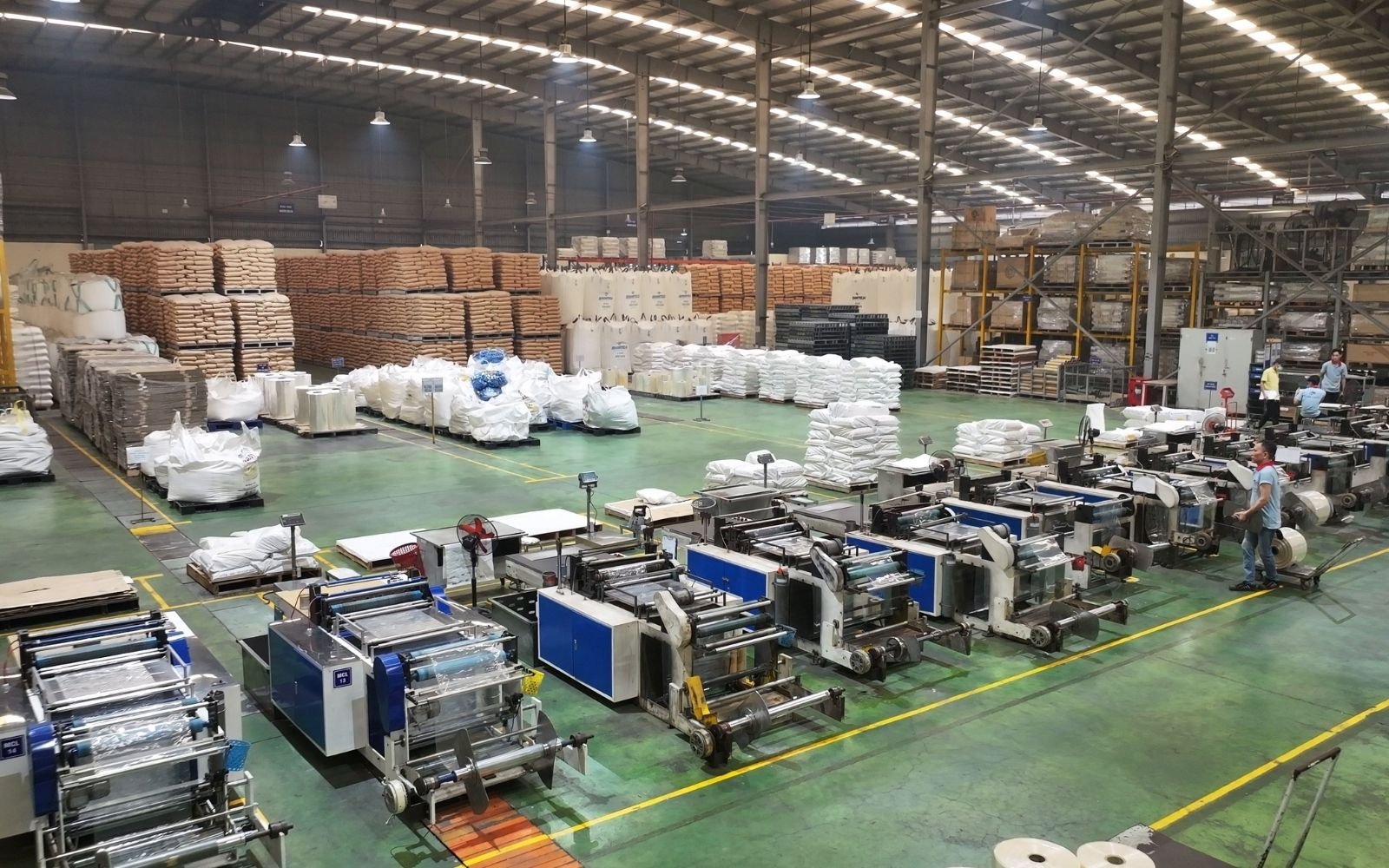
The other standard buyers should know is UL 94, the vertical/horizontal burn test that classifies plastics from HB (slowest) up through V-2, V-1, V-0, and 5V/5VA (strictest). V-0 — the rating most commonly required for electronics and cable applications — requires that flaming stops within 10 seconds of each flame application, that total flaming time across all test specimens stays under 50 seconds, and that no flaming drips ignite cotton placed below the sample (RTP Company’s UL94 V-0/V-1/V-2 standard breakdown). One caution worth passing along: LOI and UL 94 don’t correlate directly — a material can have a high LOI without a V-0 rating, or vice versa, because the two tests measure combustion behavior in different orientations (HanLink Polyester’s explainer on LOI vs UL94). If FR performance matters for your application, ask for both numbers, not just one.
Bundled specification summary
| ESD / Antistatic Film | UV-Resistant Film | Flame-Retardant Film | |
| What it measures | Surface/volume electrical resistance | Color/gloss stability under simulated sunlight | Self-extinguishing behavior & ignition resistance |
| Key standard(s) | IEC 61340-2-3:2016, ANSI/ESD S20.20, ASTM D4496 | ASTM G154 (QUV), ASTM G155 (xenon-arc) | UL 94 (V-0 to HB), ASTM D2863 / ISO 4589 (LOI) |
| Typical benchmark | 10⁶–10⁸ Ω (transparent dissipative grade) | ΔE*ab color change after defined exposure hours | UL 94 V-0; LOI >28% for flexible PVC with FR additives |
| Common application | Electronics protection, cleanroom, ESD packaging | Outdoor signage, agricultural film, weather-exposed components | Cable jacketing, electronics enclosures, transport applications |
Where Tín Kim fits into this picture
To be direct about where things stand: Tín Kim does not currently manufacture ESD, UV-resistant, or flame-retardant film as a standalone product line. We’re studying this category as a potential extension of our core business — compounding PVC formulations — because the underlying competency is the same one we’ve built over 26+ years: selecting the right resin, designing the additive system for a target property (electrical resistance, weathering resistance, or flame behavior), and controlling that formulation consistently at production scale. If you’re sourcing technical PVC film and want to talk through the specifications above with a compounder that understands the underlying chemistry — even before any of us has a finished SKU on a shelf — we’re a reasonable party to have that conversation with.