
EU Plastics Strategy 2030: A Legal Framework Taking Shape
EPR and PVC recycling now sit at the center of Europe’s circular-economy agenda. The EU Plastics Strategy (COM/2018/028) sets a 2030 target: all plastic packaging placed on the EU market must be recyclable. This framework is being implemented through two main pillars: the Packaging and Packaging Waste Regulation (PPWR — still being finalized) and mandatory Extended Producer Responsibility (EPR) programs at the member-state level.
EPR places the financial burden of end-of-life collection and treatment on producers and importers — not consumers, not governments. Data from PlasticsEurope (2024) shows total EPR fees paid by the EU plastics industry have exceeded EUR 2 billion/year, a figure projected to rise as mandatory recycling rates increase toward 2030.
PVC in Mechanical Recycling Systems: A Real Technical Problem
PVC poses a specific technical challenge in mechanical recycling systems. The core issue lies in its chlorine content (~57% of PVC’s molecular weight) — when PVC contaminates a stream of PE, PP, or PET during recycling, chlorine can cause cross-contamination, degrading recycled material quality and corroding recycling equipment. This is a technical reason — not a political one — why some EU countries exclude PVC from combined mechanical-recycling collection programs.
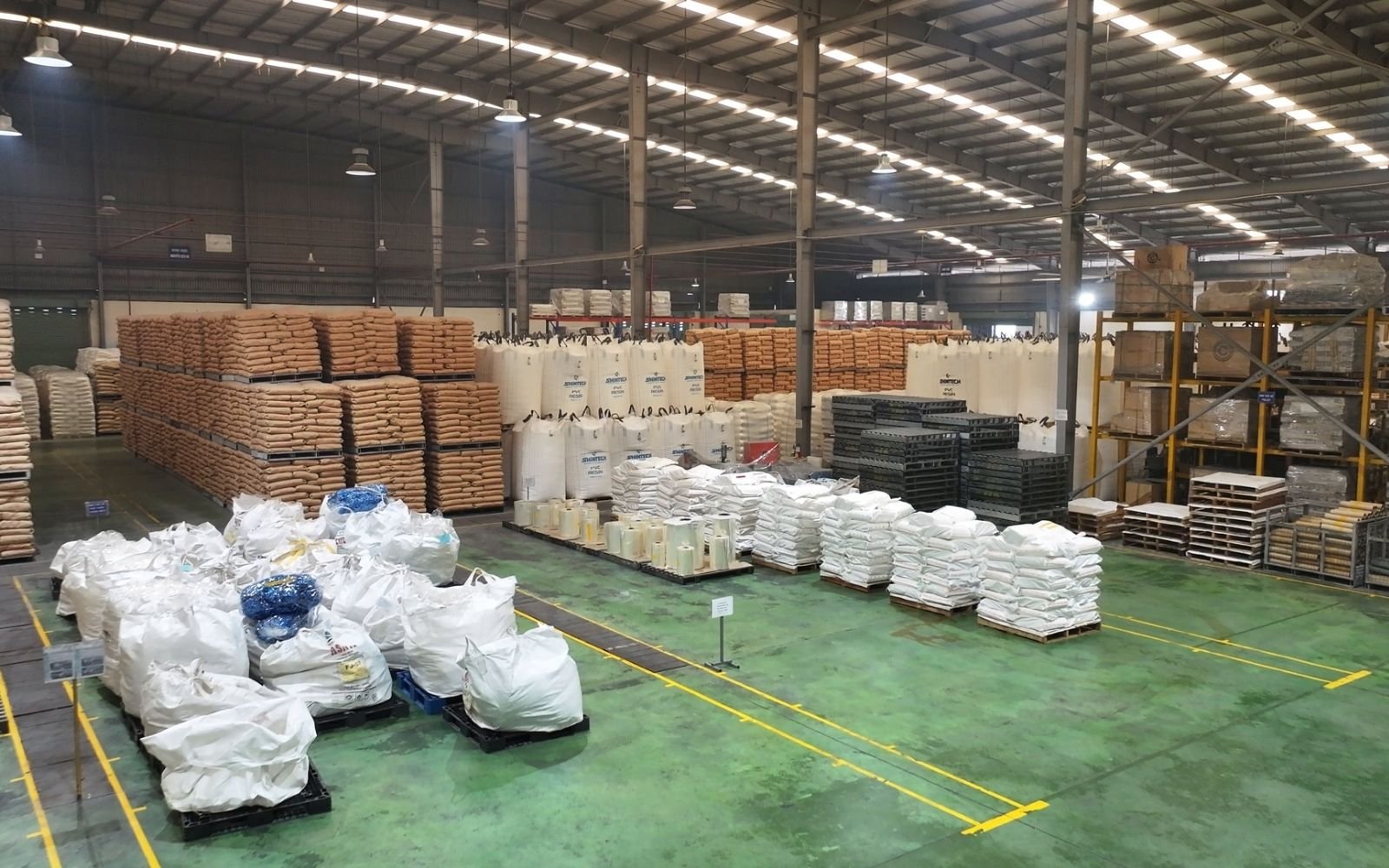
| VinylPlus 2024 Data VinylPlus — the European PVC industry’s voluntary commitment program (successor to Vinyl 2010) — reports recycling 820,000 tonnes of PVC in the EU in 2023. This figure is notable, but should be read in context: total PVC placed on the EU market annually is estimated at 4.5–5 million tonnes (PlasticsEurope, 2023), meaning the real recycling rate remains under 20%. |
Chemical Recycling Technology: Potential and Current Limits
Chemical recycling — specifically dehydrochlorination (DHC) to separate HCl from PVC before processing — is being developed as a complement to mechanical recycling. Several pilot plants are already operating at small scale in Germany and Belgium. However, data from ICIS (2024) and Wood Mackenzie shows this technology has not yet scaled economically at large commercial volume — processing costs remain 2–3 times higher than mechanical recycling for PE/PP.
Vietnam: Decree 08/2022 and the Domestic EPR Roadmap
In Vietnam, Decree 08/2022/ND-CP has established a mandatory EPR framework, requiring producers and importers of certain plastic packaging to contribute financially to the Environmental Protection Fund. In the initial phase (2024–2025), PVC is not yet on the mandatory EPR fee list. However, an expanded roadmap for 2025–2027 is being drafted.
| ⚠️ Legal Issue Requiring Clarification When a Vietnamese business exports plastic products into the EU market, EPR obligations are determined by the importing country’s law — not Vietnam’s law. Example: a PVC flooring manufacturer exporting to Germany may need to register and pay EPR fees under Germany’s Verpackungsgesetz (VerpackG) if goods are packaged in Vietnam and then sold at retail in Germany. This is a matter requiring separate legal advice specific to each export market. |
| Level | Regulation | Impact on VN exporters |
| EU — Packaging | PPWR (being finalized 2024–2025) | Must be 100% recyclable packaging by 2030 |
| EU — National EPR | Varies by member state | Must be determined per specific target market |
| VN — Domestic | Decree 08/2022, expansion 2025–2027 | PVC not yet mandatory — monitor updates |
| VN — Export | Follows importing country’s law | Requires legal advice per specific market |
Source: PlasticsEurope Environmental Report 2024; VinylPlus Progress Report 2024; ICIS Chemical Business 2024; Decree 08/2022/ND-CP; PPWR Draft Regulation (EC)
| ❓ Open Question Which EU markets does your company’s plastic products export to? Has the legal team verified EPR obligations under each importing country’s law? And with Vietnam’s domestic EPR roadmap expanding, has your company started tracking which material categories will fall under the mandatory scope next? |
Source: VinylPlus Progress Report 2024; PlasticsEurope European Plastics — Facts 2024; COM/2018/028 EU Plastics Strategy; ICIS PVC Market Outlook 2024; Wood Mackenzie Chemical Recycling Report 2024