
Automotive interiors are one of the more demanding environments a PVC compound can be specified for — not because the mechanical requirements are unusual, but because a closed cabin heating up in the sun turns any volatile chemistry in the material into something the driver can smell, or in the worst case, see as a haze on the windshield. This is a guide to the standards PVC Compound for Automotive that govern that behavior, and what they mean for compound formulation.
Why automotive interiors are a special case
PVC remains one of the primary polymers used for seat coverings, dashboard skins, door panels, and wiring in vehicles, and the plasticizers that give it flexibility — commonly phthalates such as DEHP, DINP, DIDP, and BBP — are exactly the chemistry regulators and OEMs are increasingly tightening rules around, due to migration and toxicity concerns. Bio-based alternatives like ESO (epoxidized soybean oil) and ATBC can reduce plasticizer migration by roughly 30–40% compared to DEHP and cut simulated-cabin VOC emissions by up to about 35% — but they typically cost 20–35% more and have lower thermal stability, which limits their use in under-hood or high-heat locations. A less obvious interaction worth knowing: combining DEHP with the common antioxidant BHT can actually accelerate BHT migration, increasing VOC output and contributing to windshield fogging — which is why a number of manufacturers now restrict that specific combination under REACH and DIN 75201.
The standards that govern VOC and fogging
Several test methods, mostly German-automotive-industry (VDA) in origin, govern how this gets measured and specified:
- VDA 278 / VDA 276 — measure VOC (volatile organic compounds) and FOG (semi-volatile/fog-forming compounds) either at the material level (via thermal desorption tube) or the component level (in a 1m³ emission chamber), analyzed by GC/MS.
- VDA 277 — measures total carbon content using Headspace GC/FID.
- VDA 270 — a sensory odor test, scored by three trained evaluators on a 1 (undetectable) to 6 (unacceptable) scale.
- VDA 275 — measures formaldehyde specifically, via the flask method.
- DIN 75201 — the fogging standard itself: quantifies condensation of semi-volatile compounds on glass (the actual haze that obscures visibility), typically part of the PPAP approval process for interior components.
Beyond VOC/fogging, weathering resistance matters for any interior surface exposed to sunlight through glass — governed by standards like ISO 4892 — and REACH limits DBP/DEHP/BBP to under 0.1% by weight in toys and child-contact products, a rule that indirectly shapes plasticizer selection for automotive interiors even though the direct regulatory target is different.
What this means for formulation
None of this is exotic chemistry, but it does mean automotive-grade PVC compound is a formulation exercise with several simultaneous constraints: plasticizer choice affects migration and VOC output, plasticizer-stabilizer combinations can interact in non-obvious ways (the DEHP/BHT example above), and the cost-performance tradeoff between traditional and bio-based plasticizers has to be weighed against where in the vehicle the material actually sits — a dashboard skin in direct sun has different priorities than door panel trim.
Where Tin Kim fits
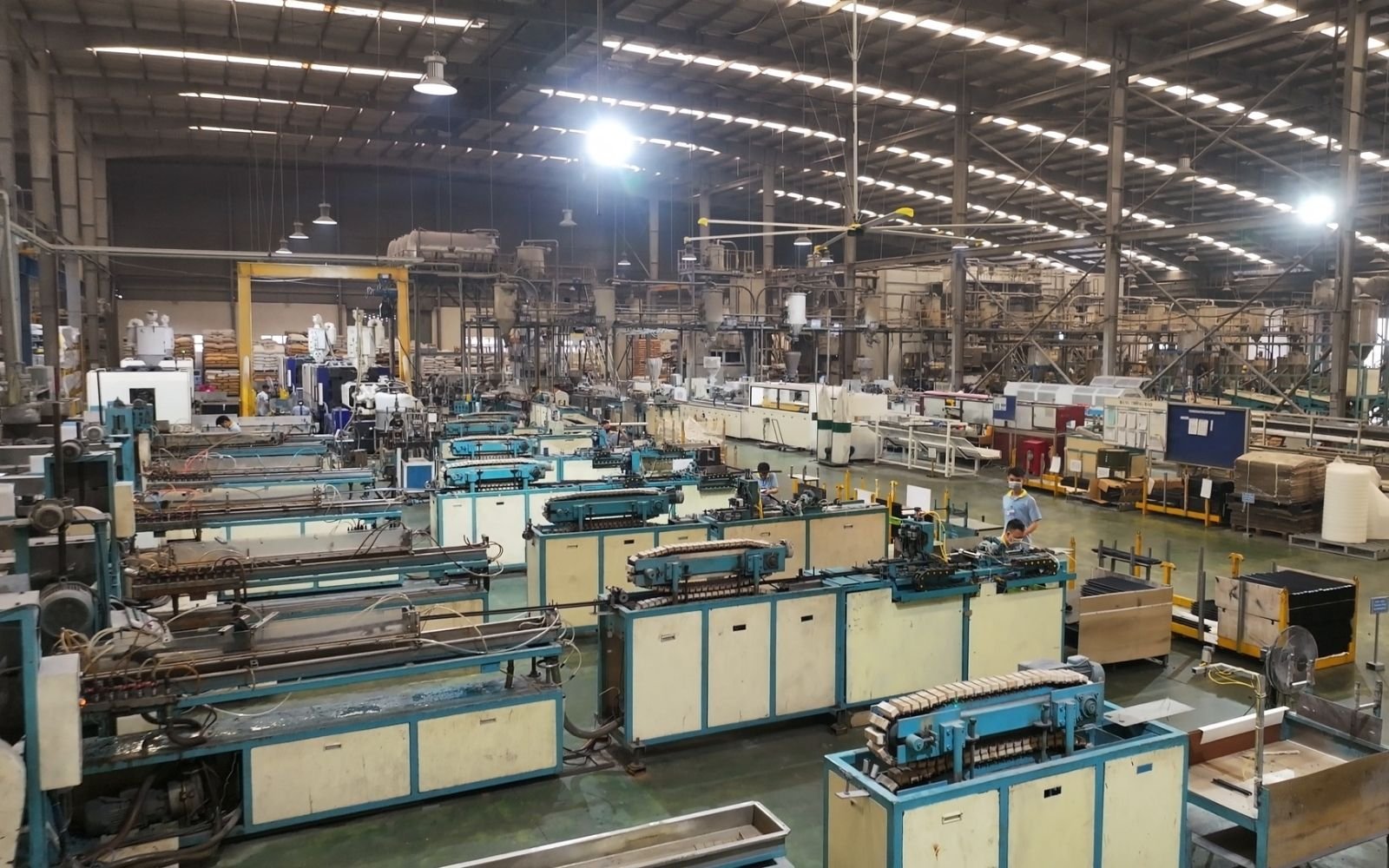
To be direct about it: Tin Kim has not yet supplied a customer in the automotive sector, so nothing here should be read as a claim of automotive OEM experience. What we do have is 26+ years compounding both rigid and flexible PVC, including work with plasticizer systems and additive packages for other demanding applications. If you’re evaluating compounders for automotive-adjacent PVC and want to discuss how a formulation would need to be built to meet VOC/fogging targets, we’re a reasonable technical conversation to have — with the caveat above stated plainly upfront.